
Carry the One: Archaeology Education at a Math Teachers’ Conference

This lesson uses a granola bar “test unit” to teach Cartesian Coordinates & mapping. A color-coded map of a site in St. Augustine, FL makes an apt example. (courtesy of St. Augustine Archaeology Division).

“Ooh! I need this! I’m teaching my kids about this soon. This one too!” The teacher walked away from our table, two new archaeology- based math lessons in hand. I was almost giddy. As a public archaeologist, I love finding ways to reach out to educators, whose efforts shape the future of our communities. Attending teacher conferences, such as the Florida Council of Teachers of Mathematics, offers a unique chance to reach out to teachers.

The Florida Public Archaeology Network uses an education outreach strategy that involves working directly with teachers. Believe me, I love getting into classrooms and engaging students in archaeology activities—it lights my fire to spark curiosity and fascination in kids. But interacting directly with teachers affords a more efficient method of disseminating archaeology to students. According to Ruth Selig (1991: 3), each educator that attends an archaeology workshop reaches 120 students per year.

Our vendors’ table is set and ready for the conference to start. Photo courtesy of the Florida Public Archaeology Network.

Statewide conferences for teachers of math, science, social studies, and even media specialists provide an apt forum to introduce archaeology resources to a large number of teachers in just a couple of days. Better, we don’t have to navigate the structure of a particular school district to make contact. They arrive at the conference and here we are–ready to provide resources that speak to specific standards and skills, using authentic archaeological examples.

In two or three days at a vendors’ booth, we see hundreds of educators. This year, we met teachers of various grades, curriculum specialists, district math coordinators, and even staff from Florida’s Department of Education. We offered a range of resources: lessons, free classroom visits, and teacher workshops (that often provide in-service credit). Teachers received our contact information and provided e-mail addresses if they wanted us to follow up with them.

We also offered a presentation to enhance our connection with the most interested teachers, treating it as a mini-workshop on some of our favorite math lessons. Each participant receives a folder with a bit of info about FPAN and copies of several lessons. I presented a slide show that demonstrates authentic examples of archaeologists applying principles of mathematics: mapping to scale, using the Pythagorean Theorem, and ceramic frequency analysis that explores a changing market. Then our educators get hands-on experience, trying some of our favorite lessons for themselves and asking questions as they arise.

A teacher uses a sherd to apply a Project Archaeology lesson on finding circumference. Photo courtesy of the Florida Public Archaeology Network.

The table and workshop both yield overwhelming positive response to the resources we offer. And I’ll be honest: I take personal and professional gratification from working at them. I was the child of two teachers; having watched my mother (a special education teacher) struggle for years to create her own curriculum and cobble together materials from disparate sources, I know educators can struggle to find engaging material with authentic applications of educational standards. Having a glimpse into the personal expenses that teachers can incur to offer the best experience for students, it delights me to no end when teachers ask how much a class visit costs. I know what will follow my answer: “It’s FREE?”  They are excited to discover that yes, there is a LOT of math in our science, and science in our social studies, and primary source research all over the place. Students, like other humans, relate better to a concept when they see authentic examples.  Seeing how skills may be used in “real life”—or even better, how a skill set can be used to explore or understand something fascinating, helps foster connections and sticky knowledge.

As an archaeologist, I love the responses we get from teachers—for any of these reasons—in a different way. The more they love our resources, the more likely they are to share them with students in the first place. They get support and authentic examples, and in the meantime increase archaeology literacy among the young population.

Having now participated in teacher conferences for a few years, I have found some strategies quite useful. Here is a quick list:

• Make contact info easily accessible. We have a postcard (that also features info about what we can do for teachers) to serve just this purpose.

• Post presentation information at your booth.

• Give it away if you can! After last year’s workshop we had some leftover folders, so we set the extra lessons out on our table. It was like Trick-or-Treat for grownups! Teachers were virtually swarming.

• If you offer lessons, address a range of grades. We handed out two lessons each for elementary, middle school, and high school.

• Align lessons with your state’s educational standards. This can be a doozy, as state standards around the country are in a state of flux right now, but teachers appreciate the effort.

• Provide lessons that meet standards in multiple subject areas, particularly in elementary and middle school. Teachers may teach to more than one subject, or cooperate with others to cover several subject areas.

If you have tried contacting teachers, what strategies have worked for you? Are there any tactics we should add to those we’re already using at teacher conferences? What challenges have you faced? Are there any methods for reaching educators that you would like to learn about more?

For a look at the educational materials that FPAN uses most often, visit Project Archaeology, or download our free lessons on Timucuan Technology, Coquina Queries, and a book of general lessons called Beyond Artifacts.

Bibliography

  • Selig, Ruth
    • 1991     Teacher Training Programs in Anthropology: The Multiplier Effect in the Classroom.  In Archaeology and Education: The Classroom and Beyond.  Archaeological Assistance Study Number 2.  KC Smith and Francis P. McManamon, editors, pp. 3-7.  U.S. Department of the Interior, National Park Service, Washington, D.C.

Living Archaeology Weekend

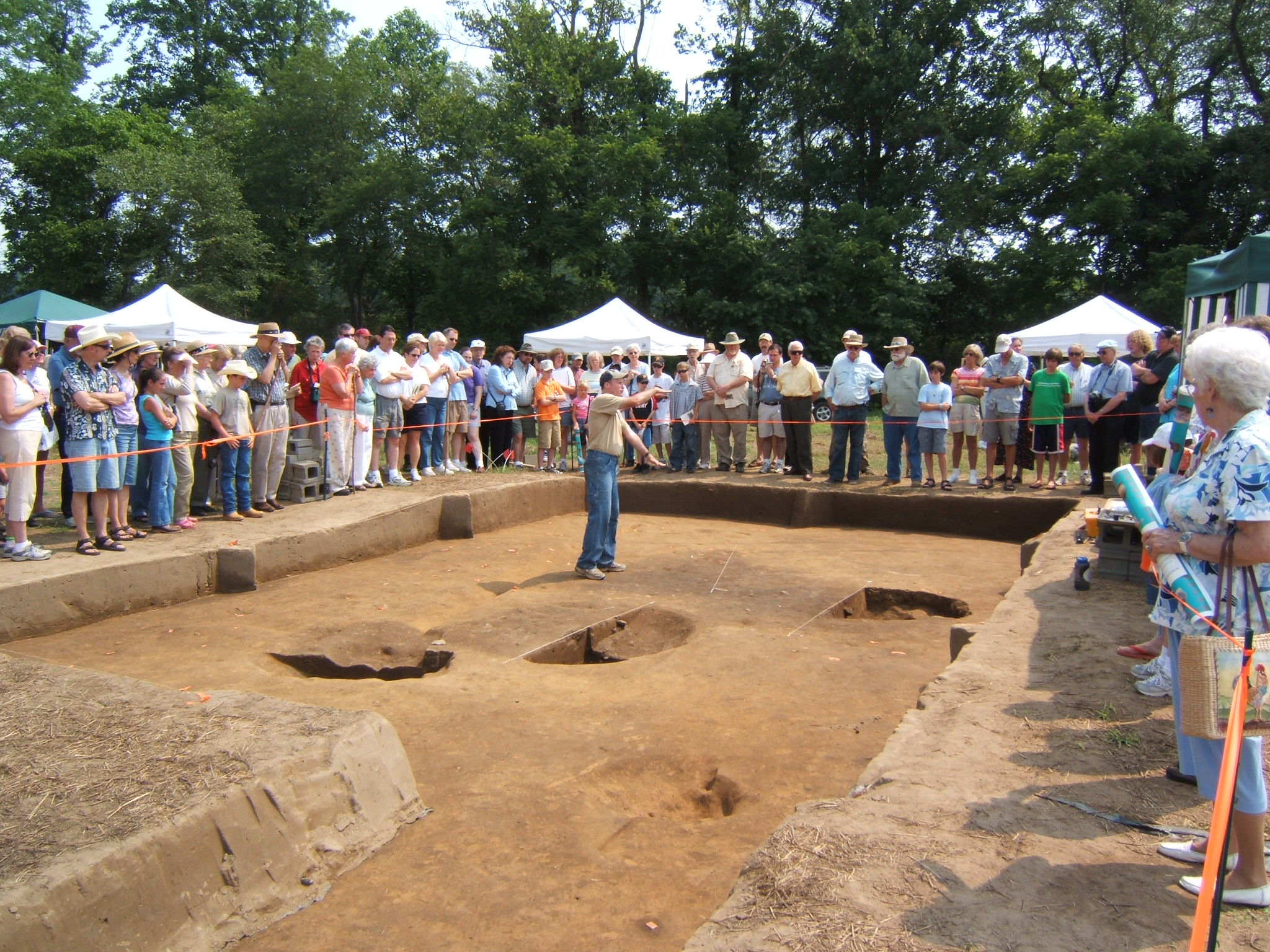
Students gather at demonstration stations.

Welcome to Living Archaeology Weekend in Kentucky!  On the third weekend of September, every year, over 1500 people travel to the Gladie Learning Center in the Red River Gorge in Kentucky, to learn about technologies through time.  The objective of Living Archaeology Weekend (LAW) is to provide a diverse, high-quality, multi-sensory educational opportunity in American Indian and Pioneer technologies and other lifeways, archaeological interpretation, and archaeological site preservation.

The Audience

Each year, the Friday of LAW is devoted to a target audience of over 800 5th graders from local and regional schools.  In recent years, the steering committee developed teacher training workshops, pre-field trip classroom visits, and formal curriculum that can be used throughout the year.  After their visit, students have the opportunity to enter an essay contest addressing the importance of preservation of cultural resources. The winning student receives accolades in the news, and pizza party for their class, and a set of classroom resources for their teacher.

On Saturday, LAW is open to the public and typically draws upwards of 900-1000 visitors.  On both days, the demonstrations are held on the rolling acreage of the Gladie Learning Center. The native technology and lifeways demonstrations are set-up along a creek floodplain, and the pioneer technology and lifeways demonstrations are located at the Gladie Cabin.

The Experience

5th graders try their hand at tanning.The Native Demonstration Area hosts a number of exciting technology demonstrations, including flintknapping, bow-arrow, fishing, blowguns, pottery making, stone bowl and pipe making, willow basket weaving, and cane mat weaving. Visitors can try their hand at spear throwing with an atlatl, cattail mat weaving, cordage making, and hide tanning. At the pump drill demonstration, visitors use flint-tipped drills to make their own shell and rock pendants.

At the plant domestication demonstration, visitors learn about native crops, use native gardening technologies like digging sticks and shell hoes, and earn free packets of native squash seeds. Because the Red River Gorge is a World Hearth of Plant domestication, we have a demonstration on medicinal plant use on Friday. Learning about plants that were first domesticated in Kentucky, and how those plants were used for food, shelter, storage, and clothing is just one of the many experiences at LAW.

Other demonstrations focus on native arts and games. Visitors learn about cane flutes and listen to beautiful music. On Friday, members of the United Keetoowah Band of Cherokee Indians of Oklahoma lead students in the traditional stickball game. On Saturday, they demonstrate the Cherokee marble game and basket making.

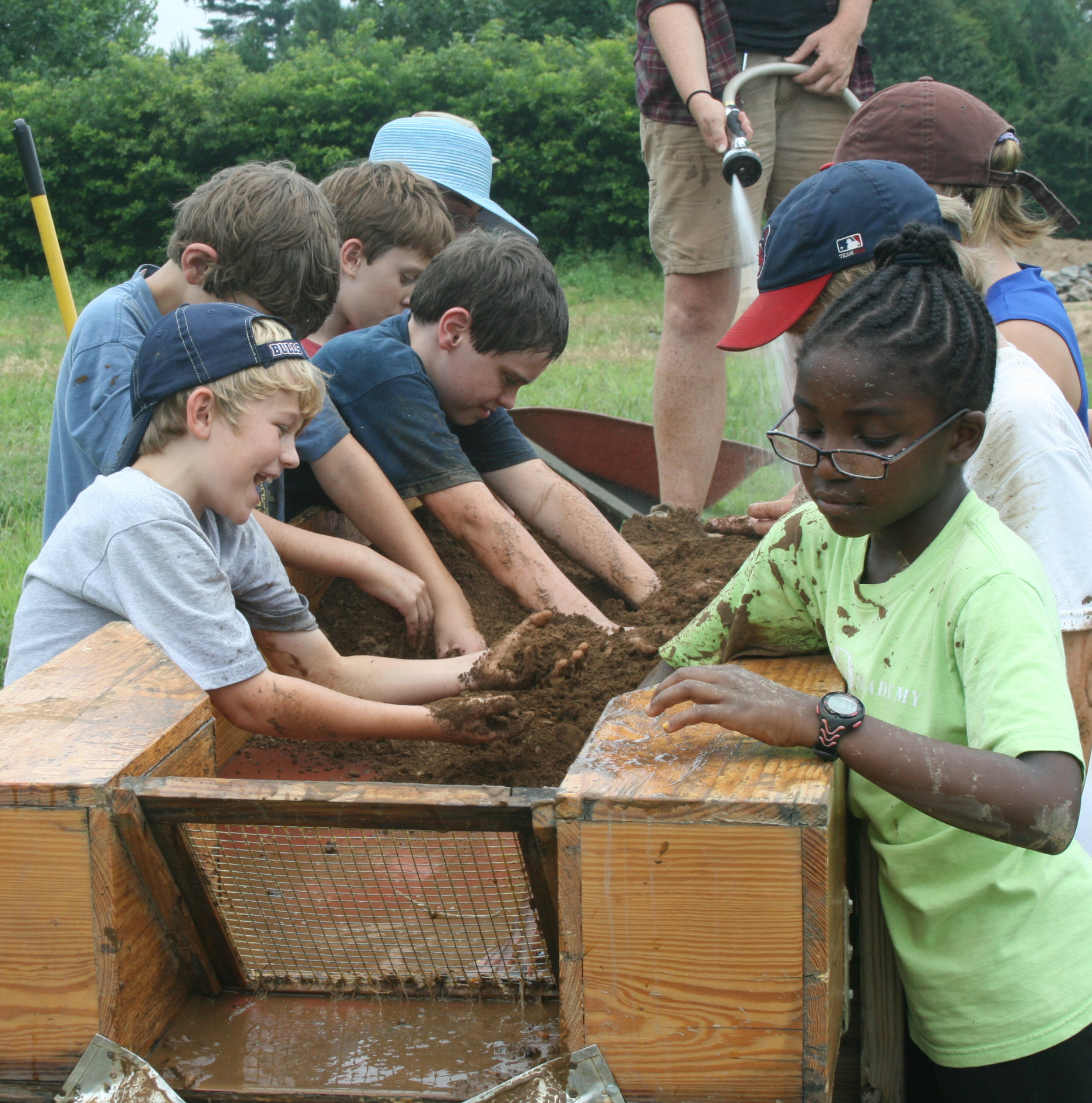
Students grind corn that they just husked in the previous station. Next stop: ceiving the cornmeal!

Several of the pioneer demonstrations focus on corn, from farming and processing methods to tools and technology to crafts. At the spinning and quilting demonstrations, visitors can use drop spindles and tack a quilt. Students participating in Living Archaeology Weekend 2011 helped create a beautiful quilt for Community Hospice in Ashland, Kentucky. The blacksmith demonstrates methods of forging, melding, heat treating, and finishing. A longhunter recreator in period dress describes technology and trading on the early Kentucky frontier. Music demonstrations featuring traditional instruments celebrate the rich traditions of Appalachia.

The Gladie cabin, which was listed on the National Register of Historic Places in 1989, formerly served as a hotel, a post office, and a home before being moved to the Gladie Cultural-Environmental Learning Center. Stewardship and preservation are also a primary goal of the event, and visitors are invited to tour the Gladie Cabin and learn about the importance of site stewardship. This particular cabin has been furnished over time with collected materials from the community. Rather than interpret a particular period in the cabin, or take out modern materials, we decided to harness the teachable moment and, next year, ask the visitors to think critically about the cabin and to decide what items might not represent the cabin history accurately.  Do you have ideas on more ways to interpret historic cabins?

Growing and improving

The Gladie Cabin.

The steering committee is always brain storming ways to improve our materials and the experience. One oversight we recognized this year was that the connection between archaeology and the demonstrated technologies is not clear. One solution is to develop signage for each station noting clear, concise examples of archaeological signatures for each technology. We’d appreciate examples or suggestions below!

In addition to improving the actual event, we are constantly seeking new ways to attract educators in our region to the teacher workshop. If you have suggestions on reaching teachers and successfully attracting them to a certified training event, please let us know.

Support

LAW is made possible by a host of private sponsors and, in large part, by the Daniel Boone National Forest, the Kentucky Archaeology Survey, the Kentucky Organization of Professional Archaeologists, and the Kentucky Heritage Council. This year marked the 24th year of the event and we are proud to say that it gets better every year!  Check out our website for more event details and links to education materials (www.livingarchaeologyweekend.org ).

The World Archaeological Congress, January 14-18, 2013

http://wac7.worldarchaeologicalcongress.org/
Early registration ends October 20, 2013.

As members of the Society for Historical Archaeology, I would like to invite you to the Seventh World Archaeological Congress, held in Jordan from January 14 – 18 in 2013. WAC is a vital, diverse, non-governmental, not-for-profit organization which promotes world archaeology. It is our pleasure to remind SHA members that the WAC conference follows directly after the SHA conference in Leicester, UK (January 9-12) and that it is a relatively inexpensive flight away from the UK for attendees.

The World Archaeological Congress holds a dynamic, diverse, and international conference every four years, with a strong commitment to participation by indigenous and underrepresented voices. This Congress should hold particular interest for SHA members, as it is deeply involved in current issues that have near-universal importance in our profession.

Three sessions of particular interest to SHA members might be:

Session Title: Socially Sustainable Development
Organizers: Claire Smith, Flinders University, Australia and Sandra L.
Lopez de Varela, Universidad Autónoma del Estado de Morelos, Mexico

Throughout the world, cultural heritage is at risk, due to the pressures of development, population increases and urban growth. However, we lack much of the basic data and essential tools needed to address the ‘big picture’ challenges of heritage and development. We have not yet identified the most valuable ways of growing a workforce
around cultural heritage, or of building heritage capacity. We do not have the tools to evaluate the social and economic consequences of a loss of cultural heritage. Throughout the world, we are facing an irreversible loss of cultural heritage, without the data to understand what this might mean, not only in terms of lost pasts but also in
terms of lost futures.

This session will present case studies on ways to move forward. It will focus on how cultural heritage can be used to generate jobs, create a sense of connection between people, promote cross-cultural understandings, and contribute to social inclusion and wellbeing. It will present examples of new thinking around cultural landscapes,
development and communities; finding a balance between conservation and development; and using cultural heritage to sustain communities, especially in remote regions.

Decolonizing the Ranks: Using Indigenous and Decolonizing Pedagogies
in Teaching, Mentorship, and Training
Organizers: Sara L. Gonzalez (Carleton College), and Peter A. Nelson,
UC Berkeley (Federated Indians of Graton Rancheria)

Decolonization provides a process for thinking about the ways that our research can and does matter (and to whom?). It involves thinking through the wider implications of the craft of archaeology and examining how the process of interpreting and representing the past is both deeply meaningful and politically powerful. It also entails a willingness to think beyond the traditional scope of research, focusing not solely on the products or results of archaeology, but also on how the process of collaboration offers spaces to empower,
benefit, and advocate for communities. What results from asking a basic question—How and to whom will I make my research matter?—is something that is potentially transformative, for when we highlight our accountability to both discipline and community we change what the goal of science can and should be. Envisioned thusly, archaeology
becomes a tool for increasing our understanding of the past and our ability to empower individuals and communities through that knowledge.

In this session we will consider the role of decolonization in the classroom. We invite participants to examine how engaging with indigenous and/or decolonizing pedagogies has transformed the ways in which you train and mentor the next generation of heritage
professionals.

Heritage as a ‘common’: a novel perspective on the entanglements of
culture and economy
Prof. REINHARD BERNBECK, Freie Universität, Germany; PABLO ALONSO GONZÁLEZ,
University of Cambridge. UK; JOHANA CATERINA MANTILLA OLIVEROS,
University of los Andes, Colombia.

“The commons” has emerged in recent years as an exciting arena for the examination of multiple problematic ownership situations around the globe, and thus, of an exit from the simplistic dichotomy of “private” vs. “public” property. In the form of laws, the latter categories have wrought poverty and suffering on a globalized capitalist world.” Commons” can take multiple forms, from pre-industrial remnants in rural Europe to claims by Indigenous communities against Western corporate attempts to appropriate bio-knowledge in South America. Our symposium will discuss its implications in the field of heritage and archaeology. We encourage participants from around the world to share
their ideas in theoretical and empirical papers on the connections between archaeology, heritage and property relations, addressing questions such as:

  • Could “the commons” provide a way out of problematic issues of ownership and the public/private dichotomy?
  • What is the potential of “the commons” in the fight against the commodification of heritage?
  • How can the notion of a “shared” heritage be mobilized by local communities to implement politics of redistribution and rethinking of ownership against an alienated “world heritage” that frames itself as globally “shared” common heritage of humanity?
  • What are consequences of heritage as a commons for identity politics?

Early registration for WAC ends October 20th, register now!
http://wac7.worldarchaeologicalcongress.org/

We sincerely hope that you will consider participating in WAC-7!