









Current Research: USA - Northeast
Reported by David Starbuck dstarbuck@Frontiernet.net
(Spring 2008 SHA Newsletter 40[4])
Maine | Connecticut | New York
Maine
Bryant-Barker Tavern Site, Newcastle:
Archaeological excavations continued in 2007 at the Bryant-Barker Tavern site under the direction of archaeological consultant Tim Dinsmore. The project, which was partly sponsored by the Damariscotta River Association (DRA) and the Newcastle Historical Society, included an archaeology field school for high school and college students as well as the lay public. The project was first begun in 1998 and has continued yearly since. The site was once home to shipwright Nathaniel Bryant and his wife Hannah Barker Bryant and their three children: Nathaniel II, Hannah, and Patience. An African-American female slave is listed in Bryant’s 1772 probate inventory as well.
The Bryant family arrived from the south shore of Boston in Marshfield, Massachusetts, and settled along the west bank of the Damariscotta River in 1765. Nathaniel Bryant established shipbuilding soon after, as did contemporary shipwright George Barstow who settled the same year to the south and abutting Bryant. These two contemporary shipwrights are considered the pioneer shipbuilders along the upper Damariscotta River and their sites mark the birthplace of an industry that flourished well into the 19th century.
The purpose for excavating the Barstow homestead site, otherwise known as the Hale site and excavated from 1980-2000, and the Bryant-Barker Tavern site is to provide detailed information about 18th-century shipwrights and their families and whether their success at shipbuilding or lack thereof can be determined through an analysis of the material culture found in the archaeological record.
This past summer excavators helped determine that the Bryant-Barker Tavern site had a partial cellar measuring 15 ft. x 30 ft., the cellar likely extending under one-half of the Bryant house. Locating the remainder of the Bryant homestead site has been much more difficult than one would anticipate due to the fact that the site is partly under an early-20th-century barn and that elements of the site have been completely robbed of stone and brick. The site was also built atop undulating bedrock, which in places is close to the ground surface, making it easy for post-Bryant-Barker Tavern occupants to reuse the foundation stones.
Many artifacts dating to the Bryant-Barker Tavern site occupation were uncovered in the form of sheet refuse. Dinsmore plans on continuing excavations in the summer of 2008 and anyone interested in signing up for the archaeology field school may do so by contacting Mark DesMueles of the Damariscotta River Association, P.O. Box 333, Damariscotta, Maine, 04543; 207.563.1393 or dra@draclt.org.
The three DRA field school sessions are: 13-18 July, 20-15 July, and 27 July-1 August.
Connecticut
The Archaeological Excavations of Broteer (Venture) Smith & His Family (submitted by Warren R. Perry, Professor of Anthropology; Director, Archaeological Laboratory for African and African Diaspora Studies [ALAADS]):
American Cultural Specialists LLC (ACS), under the direction of Lucianne Lavin, Ph.D., has conducted Phase 1 and 2 excavations of the approximately 560-acre Connecticut Yankee Atomic Power Company property on Haddam Neck in Connecticut. A major part of the six-year study has been the examination of the prosperous late-eighteenth-century homestead of a former slave often referred to as Venture Smith, a name chosen by his captors. ACS retained the Conservation Department of the Mashantucket Pequot Museum and Research Center to restore a number of recovered artifacts, including some mariner-associated items which are part of Smith’s legacy.
In the summer of 2006, Central Connecticut State University’s Archaeology Laboratory for African & African Diaspora Studies (ALAADS) partnered with the Office of the State Archaeologist and the Center for Applied Genetics and Technology at the University of Connecticut to learn more about Broteer Furro (renamed Venture Smith), an African prince taken captive in 1735, who reclaimed his freedom and became a well-to-do businessman and landowner in East Haddam, Connecticut. Broteer’s transcribed memoir was published in 1798 and remains one of very few first hand accounts of the life of a captive African in Connecticut.
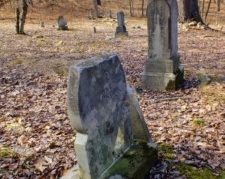
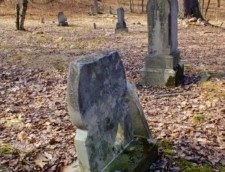
The project involved opening the graves of Broteer (d. 1805), his wife Marget (d. 1809), son Solomon (d. 1843), and granddaughter Eliza Smith Roy (d. 1902), in search of artifactual and/or skeletal material that would better inform us about Broteer’s life both here and in Africa. The archaeology was undertaken at the behest of Broteer’s present-day descendants, who attended the excavation daily and participated in all decisions on the project.
The acidic soils had decomposed virtually all of the skeletal remains, except for two bones from Marget’s lower arms. These were carefully removed and stored for DNA analysis at the UConn laboratories. Coffin remains were identified by soil stains and the presence of hardware. The three nineteenth-century coffins were similar— hexagonal-shaped and unadorned, hinged at the shoulder for viewing, and constructed with screws instead of nails. Eliza Smith Roy’s rectangular twentieth-century coffin had elaborate decorative hinges and cloth covering or lining. In addition to coffin remains, her grave yielded earrings, a wedding ring, and her vulcanized rubber false teeth.
More information about the project is available in the fall 2007 thematic issue of the journal Connecticut History (46[2]:155-183).
The Conservation of the Archaeological Collection from Broteer (Venture) Smith Homestead (submitted by Douglas Currie, Conservation Department, Mashantucket Pequot Museum and Research Center):
The conservation of archaeological material has two related objectives: first, the stabilization and preservation of excavated artifacts, aiding the immediate analysis of degrading material culture but also for use in future research, and the elucidation of diagnostic characteristics which contribute to the identification of artifacts. When an artifact is excavated and exposed to the atmosphere, rapid degradation begins which can lead to the loss of important surface detail information; or a metal object can be covered in corrosion or soil concretions which obscure surface detail such as the date on a coin. In order to perform conservation treatment on an artifact the conservator must know what an object is made of, how it was manufactured, and the type of burial environment and its effect on the condition of the artifact. These are all factors which contribute to our understanding and interpretation of an archaeological site as well as guide preservation efforts. Techniques used to determine the nature of an object include low-power microscopy, high-power microscopy of samples, x-radiography, scanning electron microscopy (SEM), and chemical testing.
The Broteer (Venture) Smith site produced an exciting range of artifacts that presented challenges for the Conservation lab at the Mashantucket Pequot Museum and Research Center (MPMRC). Conservation at MPMRC has a radiography facility which allows the pre-treatment evaluation of corroded metals to determine what remains of the original object and to record details sometimes seen best in the x-ray film rather than on the object. The Broteer (Venture) Smith cast-iron kettle, nearly intact, had sections of its original bail (hooped handle). However it was so covered in corrosion attaching it to the kettle body that it was impossible to determine its shape and detail. By x-raying the kettle we could “see” through the corrosion, discover the bail’s shape and location, and then carefully remove only the superficial corrosion, freeing the complete bail. X rays were also helpful in the treatment of a large nail/spike with corrosion and concretions on the point end. Radiography clearly showed the “swelled” end was not corrosion but original to the manufacture helping experts identify it as used in boat construction, an important issue in researching the life of Broteer (Venture) Smith. One of the most delicate artifacts was a severely degraded utensil handle of bone, which if allowed to dry after excavation would have crumbled. Conservation did not reveal any new details of the handle but will permit future generations a glimpse of Broteer (Venture) Smith’s life through this object.
The ca. 1713 Benedict House Site, Wilton (submitted by Ross K. Harper, AHS, Inc.):
Archaeological and Historical Services, Inc. (AHS), under contract to the Connecticut Department of Transportation (CTDOT), recently completed a data recovery of the buried remains of an 18th-century house along U.S. Route 7 in Wilton.
The site was identified in an archaeological reconnaissance survey of areas of road widening. Route 7, also known as Danbury Road, was a major north-south travel route throughout the historic period and still is today. The site was beneath two feet of disturbed soil classified as Udorthents-Urban Complex. Based on extensive prior experience in roadside archaeological testing and the knowledge that Route 7 is an early road, AHS tested the area carefully to determine if the soil disturbance was only superficial. Intensive archaeological survey identified dense 18th-century domestic artifacts suggestive of a filled-in foundation. Because the site could not be avoided by CTDOT, AHS conducted data recovery excavations within the roadside project area. The investigation resulted in the recovery of 13,431 artifacts and part of a 16 ft. wide dry-laid fieldstone house cellar.
The cellar extends outside of the road-widening impact area, thus the data recovery was confined to the right-of-way. The foundation is barely 16 feet from the current pavement edge. Deed research determined that the cellar was the remains of a house built ca. 1713 by Benjamin Benedict and occupied by the Benedict, Scrivener, and Abbott families until 1806, at which point buildings are no longer mentioned in the property deeds. About this time the house itself was removed and its cellar filled in with soil, chimney and foundation stones, and domestic artifacts. The filled-in cellar was then covered with topsoil and incorporated into an agricultural field. A second house was built on the property in the mid-19th century, farther back from the road and still standing. Post-agriculture landscaping and 20th-century roadwork covered the site with fill that was intermittently graded and turned over the years. But, the fill layers had, in effect, protected the Benedict cellar feature and its contents.
The
Benedict House site.
The data recovery produced a great diversity of 18th-century artifacts, including imported and domestic ceramics in the form of baking dishes, milk pans, tea bowls and saucers, a complete pewter tea spoon, and a pewter spoon handle with apparent masonic symbols. Ceramics also include a distinctive slip-decorated and tool-notched red earthenware dish, which dates to ca. 1800-1850 and is likely from a local Norwalk pottery (Wilton was part of Norwalk until it was incorporated as a separate town in 1802). This discovery presented an opportunity to link a domestic ceramic found archaeologically with a locally known pottery center, which is rare in Connecticut. Fragments of turned lead indicates the first windows were of the leaded type with green and blue-green panes. Also recovered were fragments of liquor bottle and table glass, clothing accessories, tobacco pipes, architectural artifacts, and food remains, including animal bone and shellfish. The 928 bone fragments from the cellar feature and documentary evidence show that the house occupants consumed cows, pigs, and sheep, along with geese and chickens, with a small amount of wild game, including fish and Eastern gray squirrel, game and small perching birds, and snapping turtle. Shellfish, including oyster and quahog, were also well represented.
Also recovered were artifacts associated with various household crafts, including a cufflink repaired with a straight pin, splitting feathers for rock quarrying, worked glass panes (from window repair), shell mortar-making evidence, gunflints used as strike-a-lights, and worked sheet brass and lead. Numerous straight pins, a pair of brass-handled scissors, and a thimble reflect the importance of producing and repairing clothing in the home. Because the artifact deposits in the cellar were deep and protected, preservation of organic materials was exceptionally good. Fifty-six diagnostic artifacts were specially cleaned and treated in our conservation laboratory. The data recovery at the Benedict house site has opened a window into the lives of middling sort yeoman farmers in western Connecticut in the 18th century, about which little is known.
The State Historic Preservation Office is working to preserve the remainder of the site, outside of the right-of-way, in situ. A public-oriented website and booklet are planned in the near future.
New York
Slave Burials Found During Construction Work:
During a sewer line construction project, an unmarked burial ground was found near Albany, New York. Hartgen Archeological Associates immediately responded and excavated the area of planned impact. Thirteen burials found in that area (more are suspected to lie outside the area of impact) were removed. The graves were laid out in two rows of seven with their heads located at the west end of each coffin. The coffins were of eastern white pine, and no headstones or markers were present. The coffins were very simple with no embellishments like handles or tacks. The bodies originally had been dressed in simple winding sheets closed with knots or straight pins. Wrought nails and hand-wound pins found date the burials to the 18th century. The skeletons now are being analyzed at the New York State Museum where some of the faces have been reconstructed and some DNA work done. The people buried here were probably slaves who worked on the historic Schuyler Flatts farm located nearby.
Archaeology at a Small Rural Hamlet:
Brown’s Hollow was a 19th-century mining community. Shovel tests, units, and soil flotation for seeds were undertaken by Hartgen Archeological Associates prior to construction work at the community. Excavations at Hoag’s store revealed a foundation, bases for porches, rubble fill, wrought iron strap hinge/bolts, whiteware, stoneware, tobacco pipestems, food bone, hardware, buttons, slate pencils, coins, cut nails, drill bit, screw, and more walls. A significant quantity of historic materials was found that provided information on the occupation levels at the site. The types of artifacts found in a burned occupational level indicated a fire took place there just after the mid-19th century. The fire probably also destroyed Brown’s grist mill to the east. The porch addition had a floor of stone and packed dirt rather than wood. Site integrity, artifact concentrations, and unaltered subsurface soil levels indicate the research potential of the store is high. At the mill site, large stone footers and a burnt-cellar-floor occupation level were well preserved. Excavations at a hotel site revealed a very diverse assemblage of ceramics, consistent with activities there. There was a low volume of smoking utensils in front of the hotel, which suggests either a preference for cigars or regular cleaning activities. Phase III investigations added substantially to our knowledge about a rural hamlet that had been almost forgotten. The Brown’s Hollow finds demonstrate changes from a farm market to an industrial cash economy, and the vulnerability of that settlement to changes in national economic developments. The material evidence portrays a community where personal connections were an important part of business. John Brown’s activities are not known but those of James Dey became clearer over time. Intact structural elements were found that resulted in a revision to plans to preserve all these features and their associated deposits. A study of the store ledger was also done, and a copy of this included in the report. It proved useful for understanding material culture and cash markets in a rural hamlet.
